


The Grass Behind Every Jord Biofuel
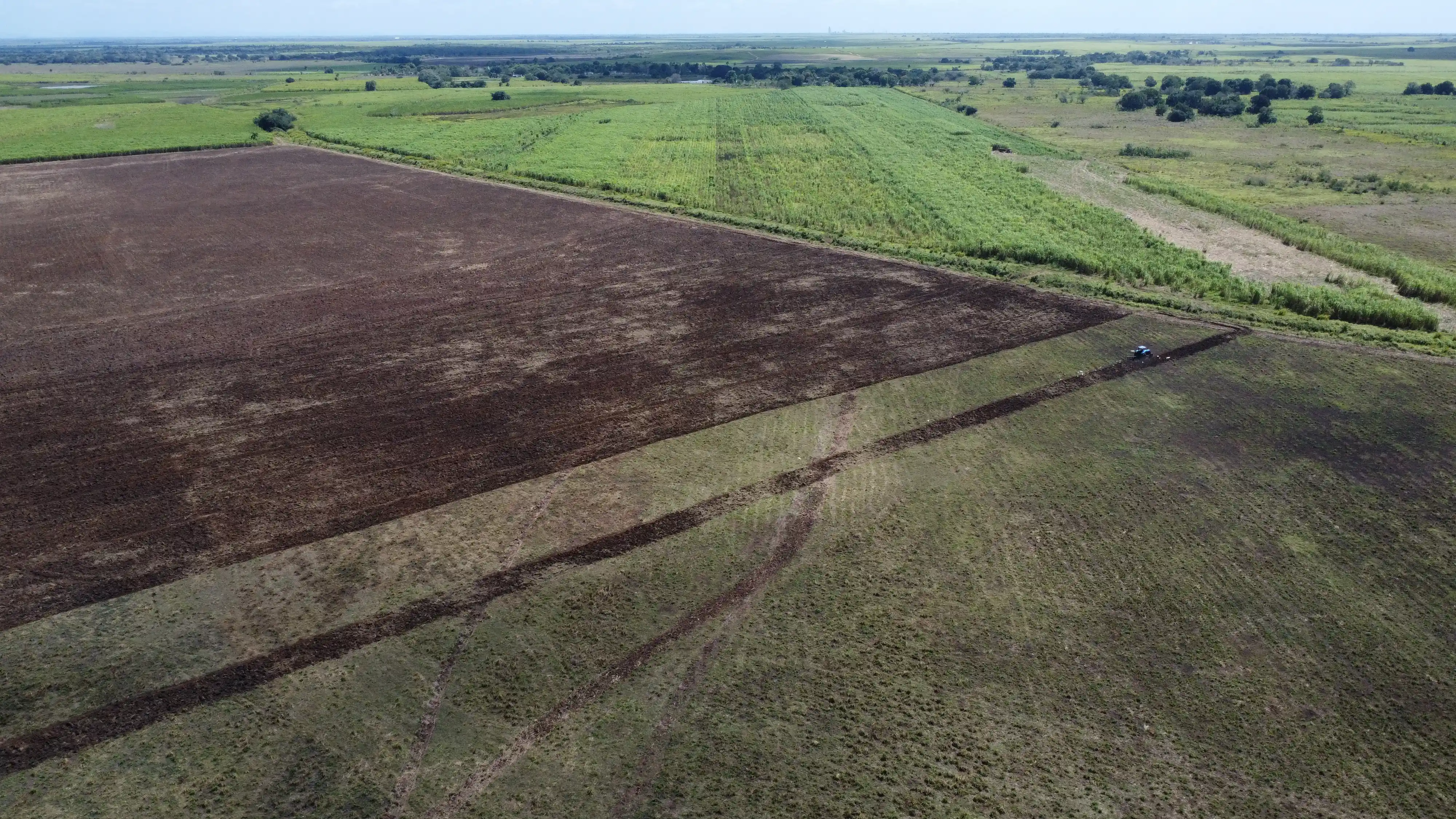
Everything Jord produces, pressed grass, fuel pellets, black pellets, briquettes, begins here. A perennial C4-grass cultivated on marginal and or dregraded land in Senegal and the Dominican Republic, harvested up to four times a year, and converted into solid biofuel without displacing food crops or clearing forests.

It starts in the field
Most solid biofuel supply chains begin with a trade-off — wood chips from managed forests, agricultural residues with inconsistent quality, or energy crops grown on land that could produce food. Jord's supply chain starts differently.
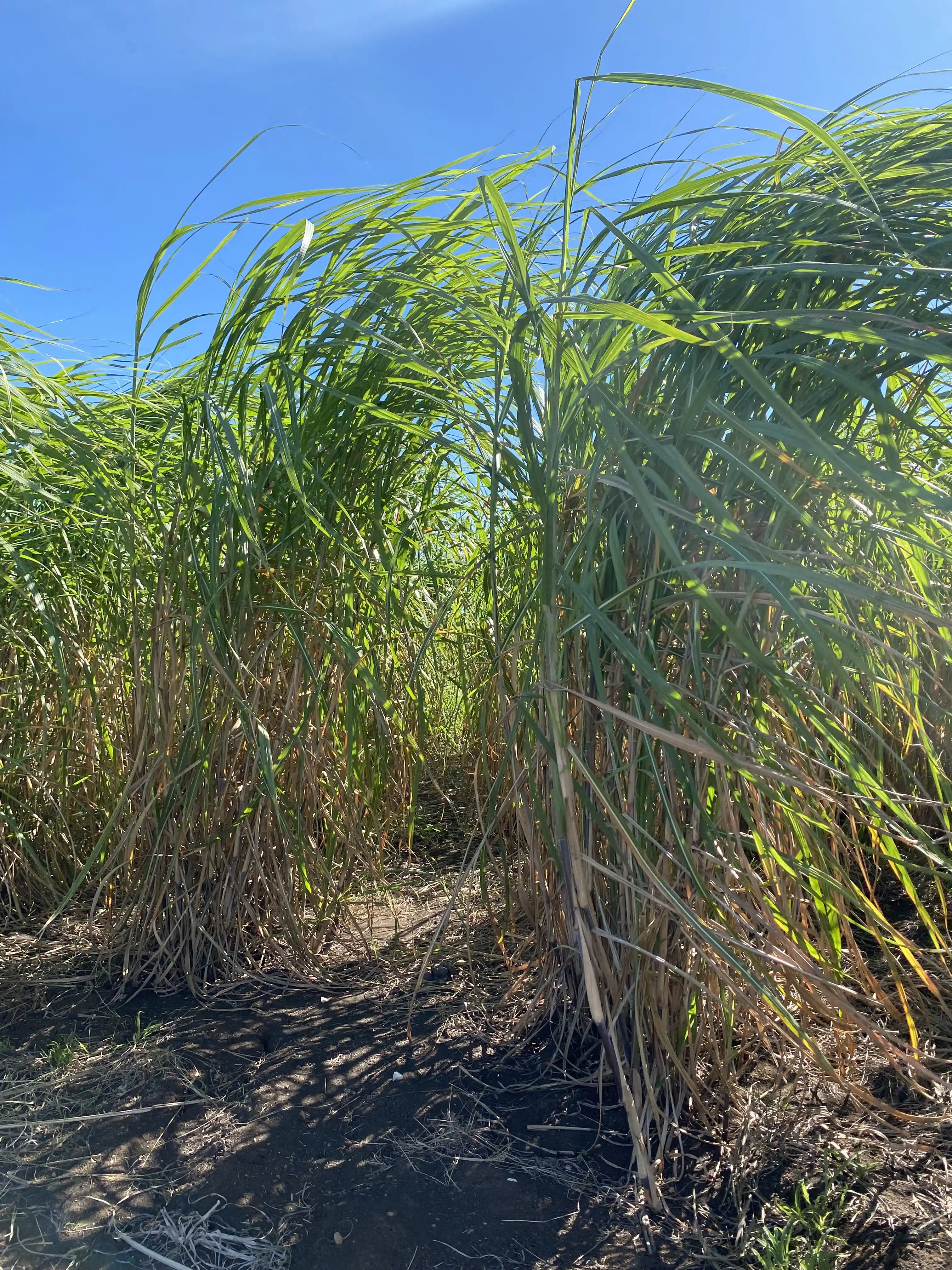
Our feedstock is C4 grass: a category of high-photosynthetic-efficiency perennial grasses that thrive on marginal, degraded soils with minimal water and no synthetic fertiliser. We grow it on land that was already underperforming. We harvest it repeatedly from the same root system, year after year, without replanting. And we convert it into solid biofuels that are carbon dioxide-equivalent negative across their full lifecycle — not through offsets, but because of how the grass grows.
The result is a supply chain with no land-use conflict, a continuously regenerating feedstock, and a carbon balance that goes below zero before the fuel is ever burned.
How it works
From Photosynthesis to Fuel
01
C4 grass draws down CO₂ from the atmosphere via photosynthesis and stores it in the grass biomass, root system and soil, playing a crucial role in the carbon cycle.
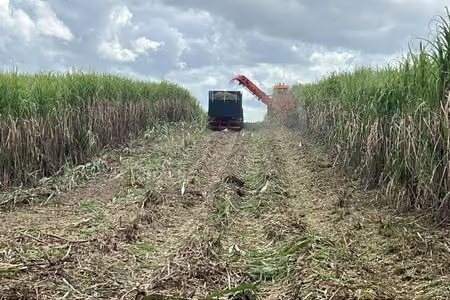
The grass is harvested and converted into bioliquid and pressed grass.
02
The pressed grass is then transformed into solid biofuels:
- White pellets
- Black pellets (via torrefaction)
- Briquettes
03
The CO₂ released during the combustion of the biofuels is then returned to the carbon cycle.
Why C4 Grass Outperforms Every Other Biomass Feedstock
High biomass yield
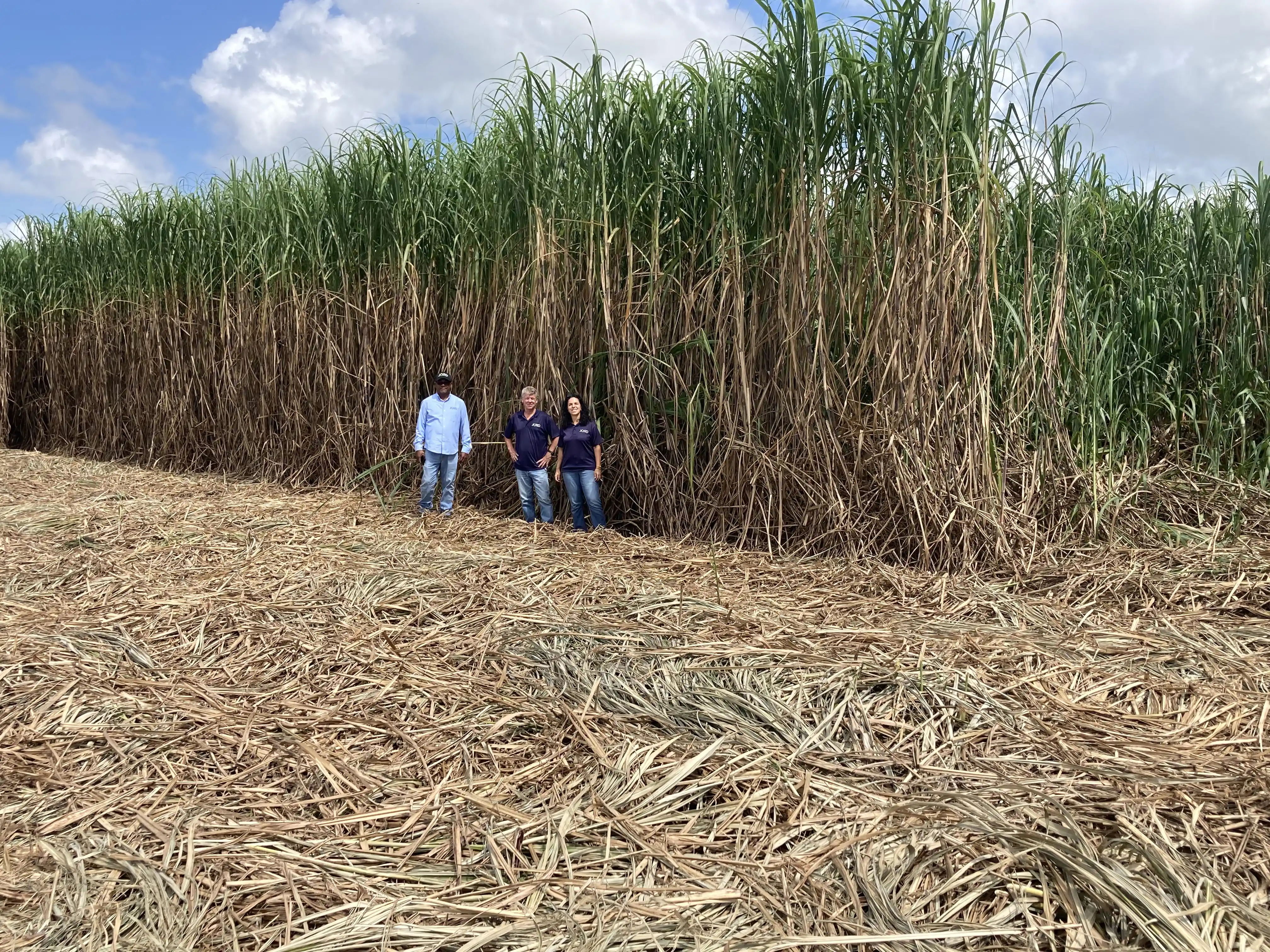
C4-grasses produce a significant amount of biomass and can be harvested up to four times a year, ensuring a continuous supply.
Adaptability to degraded soils
Our farms in Senegal and the Dominican Republic cultivate C4 grass on marginal soils, where it thrives. The grass brings carbon back into the soils together with other nutrients.
Perennial nature
C4 grasses are perennial, which decreases the need for tillage and increases below-ground biomasses. These are critical for accumulating and conserving soil organic matters and enhancing soil carbon sequestration.
High lignin content
C4 grasses have high lignin contents, which are key elements in pellet production that act as binding agents. The lignins make the pellets dense and durable, improving their overall qualities.
Photosynthetic efficiency
C4 grasses exhibit high photosynthetic efficiency and better nutrient and water use. They require minimal water and fertilizers and can adapt well to marginal and degraded soils.
Carbon sequestration
C4 grasses are among the most efficient plants for mitigating climate change by sequestering carbon in the soil.
See it in the field
The Journey from Grass to Fuel
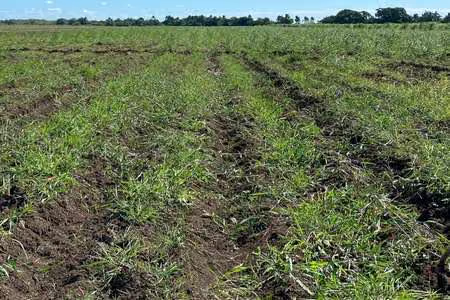
In the field
Cultivation. Harvest. Processing.
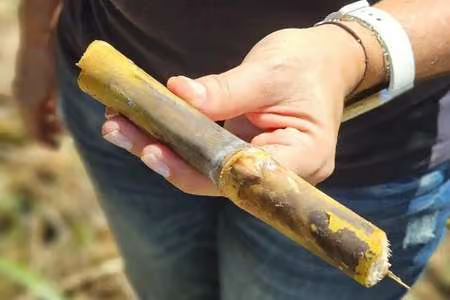
Discover Jord’s full range of solid biofuels alternatives
Pressed grass
Raw C4-grass biomass, mechanically pressed to reduce moisture content before distribution. Pressed grass is the most direct form of our biomass feedstock — suitable for industrial combustion systems designed or adapted for non-pelletised solid biofuel. It offers a cost-efficient entry point for large-scale buyers operating facilities with flexible fuel handling capabilities.
Fuel pellets
Jord's fuel pellets are solid biofuel made from C4-grass, engineered for biomass boilers, industrial heating, and pellet stoves. With a high calorific value and low moisture content, they deliver reliable thermal performance for operations already equipped to handle conventional wood-pellet-grade fuel.
Black pellets
Jord’s black pellets are produced through a torrefaction process — heating C4-grass in a low-oxygen environment to create a denser, hydrophobic solid biofuel with a higher energy content than traditional pellets. Black pellets are compatible with coal handling, storage, and milling infrastructure, making them the preferred choice for coal plant operators pursuing a drop-in fuel transition with minimal capital investment.
Briquettes
Jord's biomass briquettes offer a larger-format solid biofuel solution, compressed from C4-grass for use in industrial furnaces, large biomass boilers, and co-firing applications. Their size and density reduce handling and storage costs relative to loose biomass, while maintaining a strong calorific performance. An efficient, scalable option for buyers requiring high-volume thermal energy with a low-carbon footprint.rchase our high-energy fuel pellets for efficient, reliable, and responsible heating and power generation.


